Tulen Handwritten Font for Crafters & Small Business Owners
As someone who hand-labels small-batch candles, designs printable wedding invites, and cuts vinyl decals for local boutiques, I’ve learned that the right font isn’t just decoration—it’s part of the product’s voice. Tulen is one of those rare handwritten fonts that feels genuinely warm, approachable, and *made for real things*. It’s not overly ornate or fussy. It’s friendly, with gentle curves, subtle irregularities, and a quiet confidence that makes it work beautifully on physical goods—from kraft paper tags to glossy sticker sheets.
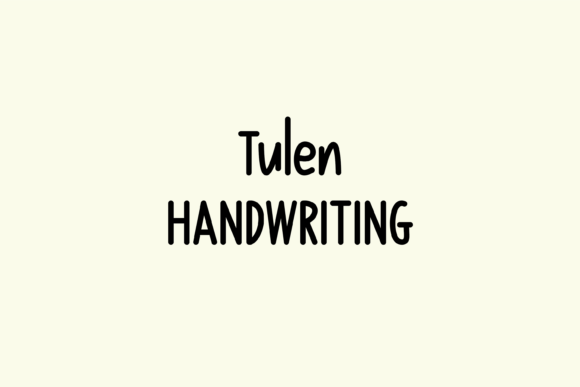
Tulen lives in the Script Amp category, but it doesn’t shout. Instead, it leans into soft whimsy—a bit quirky, yes, but never distracting. The lowercase “a” has a relaxed loop, the “g” curls just enough, and the spacing between letters breathes naturally. That matters when you’re printing 300 wedding favor tags or sizing text for a 2-inch round sticker. Unlike some script fonts that collapse at small sizes, Tulen holds its charm down to 14pt in print—and even smaller on high-res digital mockups.
I use Tulen most often for projects where personality and legibility must coexist: candle jar labels (especially for lavender honey or citrus sage blends), boutique clothing tags, baby shower invitations, farmhouse-style wall art prints, and seasonal SVG bundles for Cricut users. Last month, I designed a set of printable Easter egg hunt signs using Tulen for the titles (“Find the Golden Egg!”) paired with a clean sans serif for instructions—and customers specifically mentioned how “inviting” and “easy to read from across the yard” they felt.
It shines brightest as a display font: for headlines, product names, greeting card sentiments, and sign headers. Think “Hand-Poured Soy Wax” on a candle label, “Welcome Home” on a wooden door hanger, or “The Smith Wedding” on a chalkboard welcome board. Because Tulen is a handwritten font, it adds instant handmade authenticity—without looking like a child’s handwriting or an overworked calligraphy piece. That balance is why it works so well for Etsy shops targeting customers who value craft, care, and consistency.
For longer text? Keep it selective. Tulen isn’t built for paragraphs—but it handles short phrases, names, and decorative lines with ease. I often use it for “Est. 2022” on business cards, “Made with Love” on tea towel tags, or “Small Batch • Big Flavor” on hot sauce labels. When paired thoughtfully, it supports your brand identity without overwhelming it.
Font pairing is where Tulen really sings. I almost always pair it with a neutral, highly legible sans serif—like Montserrat, Poppins, or Lato—for body text, ingredient lists, or fine print. That contrast gives your designs rhythm: Tulen brings warmth and character; the sans serif grounds it in clarity and professionalism. For vintage-inspired packaging, I’ll sometimes swap in a light serif like Playfair Display for subtitles—but only if the serif has open counters and generous x-height, so it stays readable on matte-finish labels.
If you’re cutting with a Cricut or Silhouette, test Tulen at your intended size first. Its natural flow means it cuts cleanly at 18pt+ on standard vinyl, especially with slight letter-spacing adjustments in your design software. For intricate swashes or alternate characters, check what’s included—many Script Amp fonts offer stylistic sets, but Tulen’s strength lies in its simplicity. It ships as a standard OTF/TTF package (no web-only files), and includes basic Latin multilingual support—perfect for English, Spanish, French, and German product labels and greeting cards.
Readability on physical products is non-negotiable. I’ve printed Tulen on uncoated cardstock for thank-you notes, heat-pressed it onto cotton tote bags (using a smooth, low-bleed transfer sheet), and laser-cut it into wood signs. In every case, the font retained its friendliness without sacrificing crispness—even at 12pt on a 1.5-inch gift tag. Just avoid ultra-thin weights or excessive tracking when printing on textured surfaces; let Tulen’s natural weight do the work.
Commercial licensing is straightforward—and essential to confirm before launching. Tulen is a commercial font, meaning you can confidently use it in client work, sell SVG files on Etsy, include it in Canva templates, print it on mugs or t-shirts, and embed it in digital downloads like planner pages or wedding suite bundles. No hidden restrictions for physical goods or digital resale—just clear, small-business-friendly terms. That peace of mind matters when you’re scaling from craft fairs to wholesale accounts.
What makes Tulen different from other premium font options isn’t flash—it’s function. It doesn’t try to be everything. It’s a focused, expressive typeface built for makers who need beauty *and* reliability. Whether you’re designing holiday product packaging for a local soap maker, creating printable wall art for teachers, or building a cohesive brand identity for your stationery line, Tulen adds sincerity without sacrificing polish.
I keep Tulen in my go-to folder—not because it’s trendy, but because it converts. Customers notice the difference between “handmade” and “handcrafted,” and Tulen helps tip that scale. It’s the kind of creative font that makes your stickers feel personal, your invitations feel cherished, and your product labels feel trustworthy. Not flashy. Not fragile. Just right.
When your work carries your name—and your values—every detail counts. Tulen is one of those quiet, confident details that says, “I made this with care.”